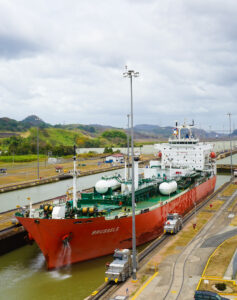
Amidst the entry into force of the Torrijos Carter Treaty of the Panama Canal, Panama acquired by reversion, the jurisdiction of the Panama Canal Water as well as Balboa and Cristobal Ports. As a consequence of maritime traffic from these waters controversies ensue which ought to be adjudicated by the Courts of Justice. Until 1982, the United States exercised jurisdiction over the Panama Canal Zone through the District Court for the Panama Canal Zone.
Law 8 of 1982 fulfills the vacuum left by the United States as they left the country. This law provides Panama with a specialized Maritime Court and procedural instruments to satisfy the need in maritime commerce.
Law 8 of 1982, also known as the Code of Maritime Procedure, has the following sources: the Code of Commerce, the Judicial Code, the Code of Civil Procedure of Colombia, the Law of Navigation of the Republic of Argentina, the Federal Rules of Civil Procedure of the United States, the Code of Private International Law (Code of Bustamente) and the London Convention on Limitation of Liability of 1976.
The Maritime Courts are accessible the 24 hrs of the day and 365 days a year due to the nomadic nature of the vessels and the operational costs of maritime operations.
The institutions of arrest of vessels, cargo, fuel or hire, the process for the execution of maritime liens, the privileged creditors´ process, the limitation of liability claims, the special proceedings in collision claims, the discovery process, the joinder of parties, the summary judgment, the digital filing of motions and appeal to the Maritime Court of Appeals are characteristics of the Panamanian procedure adopted from the sources.
In respect of labor laws, an exception for labor disputes has been lawed in order to maintain the integrity of the labor codes. However, for reasons of equity and practicality, the Maritime Courts execute arrests of vessel, cargo, fuel or hire on behalf of the labor Courts.
The principles of the maritime procedure are: orality, procedural economy, equity and facilitation of discoveries.
The arrest of vessels is the instrument to execute maritime liens against the vessel, cargo, fuel or hire. The arrest is also the means by which the Maritime Court acquired jurisdiction over an absent defendant, in order for claims to be adjudicated in the forum. The arrest of a vessel is not only a security, it is also the means by which the Maritime Court acquires jurisdiction over the claim.
The law contemplated flexible bonds requirements as well as a summary process to lift arrest for example when an arrest occurs over an improper defendant.
Motions to challenge the constitutionality of the proceedings are also available, although the filing of an action on constitutional grounds does not suspend the proceedings attacked while the decision is obtained. This rule is justified since while the consideration of an unconstitutional arrest is decided, the vessel could lift anchor and leave, abandoning the jurisdiction of the Courts.
The discoveries proceeding incorporated into the procedural law, brings forth the process by which evidence outside the Courts is filed into the docket without the intervention of the Judge, save for relevance and sanctions. The process is agile. The rules of evidence allows: depositions of seamen under oath guaranteeing veracity and authenticity of the testimonies allowing parties to prescind of the requirements of ratification.
The revealing of relevant information, facts and data conducive to probative elements is available since evidence rests with the parties to the claim. This rule is justified since parties to claims are commonly in different countries. Otherwise it would be impossible to accumulate evidentiary elements required to file claims and for the judges to adjudicate causes.
Documents commonly used in maritime commerce are presumptively authenticated. Documents such as: bills of lading, charter party fixings, maritime inspections reports.
Choice of law rules are established within the procedural code to guide the judge in determining the applicable law for a dispute. These rules are necessary because claimants may have different nationalities, and the causes of action may originate outside Panamanian territory. Given that maritime commerce involves numerous parties from diverse nations, the preferred approach is to provide a comprehensive list of claims and their corresponding applicable laws, while still respecting the contractual will of the parties.
Limitation of liability proceedings are fundamental in maritime nations, such as Panama. The limitation of liability rules protect the rights of shipowners allowing for the limitation of liability stemming from marine casualties. Limitation has been at the forefront of discussion in multilateral organisms. To such extent that International Conventions such as the LLMC Convention of 1976 and its respective protocol, the latter which Panama has not ratified. Limitation contributes to the sustainability and subsistence of maritime commerce and transport of goods by sea. Otherwise the shipowner would be obliged to assume excessive risks.